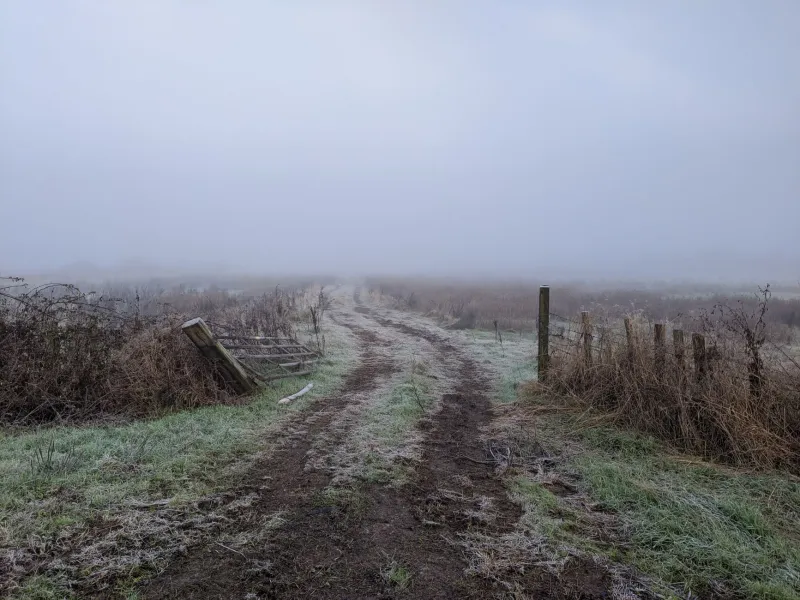
Last Orders in the Village: Tracing Iron Acton's Disappeared Inns
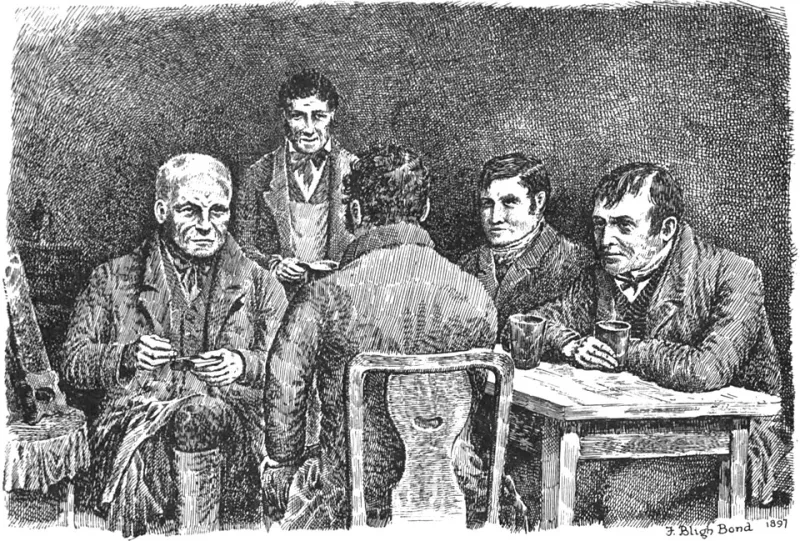
Photo: Frederick Bligh Bond, Public domain, via Wikimedia Commons
Every village has its ghosts, and some of them serve beer. Ask around Iron Acton and you will soon hear about the pubs that are no longer there: buildings that are now houses, cottages that once had a tap room, and names that survive only in old photographs or the corner of a trade directory. The story of these lost pubs is not just a story about drinking. It is a story about how the village worked.
More than a place for a pint
A village pub in the past was rarely just a pub. It could be a waiting room, a hiring fair, a parcel office, a place to settle a debt or hear the news. In a farming community, the pub sat at the junction of work and leisure. Labourers came in muddy; travellers came in dusty; landlords doubled as shopkeepers or carriers. When a village loses a pub, it loses a small piece of its social infrastructure, even if nobody misses the actual beer.
Iron Acton's position in South Gloucestershire made it part of a busy little network. It sat near the old routeways between Bristol, Yate and the Vale of Berkeley, and later it found itself on a railway branch that promised to put the village on the map. That mixture of farming, transport and proximity to larger settlements explains why the village could once support more than one place to drink.
The railway years
The railway is the obvious place to start. Iron Acton had a station on the Yate to Thornbury branch, a line that opened in the 1870s and brought a new kind of traffic through the parish. Passengers, goods, parcels and livestock all moved by rail, and the station area became a small hub. In that setting, a pub near the station made commercial sense. It was not simply a village local; it was a place for travellers, railway workers and people doing business.
The line's passenger service did not last. The station closed to passengers in the 1940s, and goods traffic followed later. But the railway left its mark on the village's shape and memory. Old maps still show the station and its sidings, and older residents still talk about the line as a fact of childhood rather than a piece of heritage. The pubs that grew up around that traffic had to adapt when the trains stopped. Some did; some did not.
Reading the directories
Trade directories are dry-looking books, but they are gold dust for this kind of history. They list innkeepers, beer retailers and shopkeepers by village, and they allow you to trace how many licensed premises existed at different points. The picture is rarely neat. A directory may list a beerhouse one year and omit it the next; a landlord may move between pubs; a building may be described as an inn in one source and a private house in another.
In Iron Acton, the names that recur in local recollection and directory entries tend to be the sort found in many South Gloucestershire villages: the Railway Inn, the Crown, the Lamb. Not every mention can be pinned down with certainty, and it is important to say so. Oral history and archive research do not always agree, and the loss of brewery records makes some questions impossible to answer. What matters is the pattern: a village with several small licensed premises, often tied to breweries or run by families who also had other work.
What the buildings remember
Walk around Iron Acton today and you can still spot clues. A house with an unusually wide frontage may once have had a public bar. A cottage with a stable door and a yard at the back may have been a beerhouse. A name carved into a gatepost or a surviving sign painted on a wall can be the only evidence left. These are not grand buildings. That is part of their charm.
The lost pubs of Iron Acton were mostly modest places: a room, a fire, a counter, a few barrels. They served a population that walked to drink and did not expect a menu. The rise of the car, the supermarket and changing working hours altered all of that. Brewery consolidation in the twentieth century also changed the economics of small pubs. A village could lose its pub without anyone deciding to kill it; the custom simply drifted away.
The slow retreat
Conversations with residents who remember the middle decades of the twentieth century often return to the same themes. People drank less often but more locally. Landlords knew everyone. A pub could be the difference between a village with a social centre and a village with nothing but a bus stop. When the last of the old pubs closed, the loss was felt less as a dramatic event and more as a gradual absence.
That does not mean the story is only nostalgic. Some of the old pubs were cramped, cold and not especially welcoming to families or women. The modern village pub, where it survives, has had to become something broader: a place for coffee, food, community meetings and a decent pint. The White Hart remains the village's best-known current pub, and its survival is part of the same story of adaptation. It is not the same institution as the old railway inns, but it carries the same social role.
Why the lost pubs matter
It would be easy to treat Iron Acton's vanished pubs as a quirky footnote. But they help explain the village. They show where people worked, how they travelled and what they did when the day was done. They also remind us that the village we see now is not the finished article. Every generation loses something and gains something.
If you have memories of an Iron Acton pub that is no longer trading, or a photograph of a building that was once an inn, the village's local history is richer for it. Last orders may have been called, but the stories are still on the bar.