Oak Trees, Iron and a Tudor Court: How Iron Acton Got Its Name
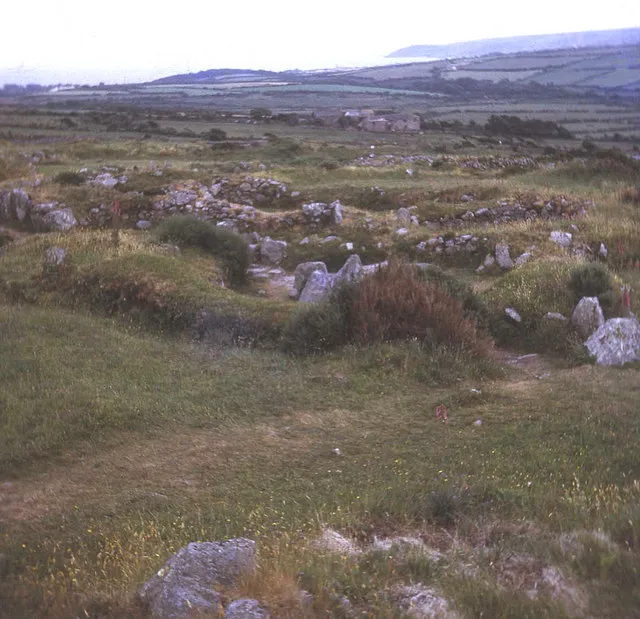
Photo: Trevor Rickard, CC BY-SA 2.0, via Wikimedia Commons
You see the name before you see the village. It is on the sign at the edge of the parish, on the school gate, on the war memorial, on the side of a van or two. Iron Acton. For most of us it is simply where we live. For anyone who has ever stopped to think about it, it is also slightly odd, because the iron is the one thing here you cannot immediately see.
This is an attempt to unpick it properly, which means admitting at the outset that nobody has produced the single document that settles the question. Place-name etymology is rarely a clean reveal. It is closer to detective work with several plausible suspects and a missing witness.
First, the easy half: Acton
The second element is uncontroversial. Acton comes from Old English, from ac, meaning oak, and tun, which is usually translated as farm, enclosure or estate. An oak farm, or the farm among the oaks. It is one of the commonest names in England, which is exactly why it needed qualifying.
You can see the logic in the landscape. These are heavy clay soils, and the old hedge banks, copses and field corners still carry a good deal of oak. Actons are scattered all over the country, and there is another one just across the county at Acton Turville, not to mention the rather more famous Acton in west London. To a medieval clerk writing a charter, Acton on its own was no more useful than writing 'the village' would be today.
Enter the iron
The distinguishing prefix shows up in medieval spellings of the manor, appearing in the record in forms close to Irenacton and Yron Acton before settling into the modern shape. That pattern, of a second word bolted onto a common place name to tell two places apart, is standard medieval practice. Chipping Sodbury got chipping from its market. Iron Acton got iron. The question is what the iron was doing there.
Theory one: actual iron working
The obvious reading is the literal one. Iren is the Old English word for iron, and the name could simply mark a place where iron was worked, smelted or found. There is nothing absurd about that in this corner of South Gloucestershire. Iron-rich ground, ochre-stained water and small-scale metalworking were all part of the wider regional picture, and the Bristol coalfield area supported a scatter of small industrial activity long before the big works arrived.
The trouble is the archaeology. No forge site has been excavated in the parish, no slag heap has been recorded, and there is no surviving manorial account describing iron production here. Absence of evidence is not evidence of absence, particularly on land that has been ploughed for eight centuries, but it does mean the iron-working theory rests on the name itself rather than on anything dug up.
Theory two: a person, not a metal
Place-name scholars are rightly wary of the literal reading. A great many prefixes that look like objects turn out to be personal names, bynames or family surnames attached to whoever held the land. Iren could have been exactly that: a nickname for a smith, or for a notably hard or unyielding man, attached to a family who held the manor and then to the manor itself. It happens constantly in English names, and it would explain why the iron left no industrial trace.
Theory three: a landmark that stuck
There is a third possibility, more mundane and arguably more likely than either. The prefix may have distinguished the estate by something small and memorable: an iron-bound gate, an iron mill, a bridge with iron work, a spring whose water ran red with mineral deposits. Medieval affixes did not have to be grand. They only had to be useful, and once a distinguishing prefix entered the written record it tended to stay there, long after the gate had rotted or the spring had been piped away.
What the estate was actually built on
The parish's medieval and Tudor wealth did not come out of a furnace. It came out of land, sheep and wool, and later out of proximity to Bristol and to the crown. The Poyntz family held the manor from the fourteenth century, and it was Nicholas Poyntz who built Acton Court in the 1530s, remodelled in a hurry and at some expense for a royal visit in 1535. That is cloth-and-office money, not smelting money.
Which is a useful corrective but not a knockout blow. A great estate can sit next to a small forge without the two having anything to do with each other, and a village name can commemorate a cottage industry that never troubled the manorial accounts.
The legend of the red water
Ask around and you will hear the folklore version: that the iron refers to chalybeate springs, iron-rich water rising through the clay, staining the ditches orange after heavy rain. It is a lovely explanation and it may even be right, but it belongs to local storytelling rather than to the documentary record. Treat it as tradition, not proof. You can still go and look at the colour of the water in the lane after a wet week and decide for yourself.
Why the name survived
By the nineteenth century the prefix had become an identity rather than a description. It distinguished the parish from the London Acton in post, in trade and eventually on the railway, where a station on the Midland line carried the name. It is now on the village sign, the school badge and every address in the parish, and it does a useful job: nobody in Britain writes 'Iron Acton' by accident.
Going to look for yourself
If you want to chase the question further, start with the church of St James the Less, where the Poyntz monuments sit and the building itself spans centuries of the parish's story. Walk the lane past the gates of Acton Court, which is private but visible from the road. Look at the tithe map and the enclosure award, held at the county record office in Gloucester, for field names that may preserve older detail. The historic environment record for South Gloucestershire is searchable online and will tell you what has and has not been found here.
The verdict
Acton is settled: the oak farm. The iron is genuinely uncertain. The most defensible position is that it is a distinguishing affix, probably drawn from iron working or iron-rich ground, quite possibly from a person, and recorded too early and too thinly for us to choose between them. Which is, frankly, more interesting than a tidy answer. The name has outlived whatever it described by six or seven hundred years, and it is still doing its job on the sign at the edge of the parish.