The Fix-It Map: Who to Tell When Iron Acton’s Lane, Lamp or Footpath Goes Wrong
Photo: Bill Nicholls , CC BY-SA 2.0, via Wikimedia Commons
There’s a particular kind of village frustration that starts with a wobble on the bike, a dark corner by the hedge or a bin bag dumped in a gateway. You notice it, you mention it, and then someone says: “That’s the council’s job, isn’t it?” Half the time nobody is quite sure which council, which department or which form. So the problem sits there, quietly getting worse, while everyone assumes someone else has already reported it.
This is not a rant about bureaucracy. It’s a decoder. Around Iron Acton, most everyday gripes do have a route — it just helps to know which one to take, what to put in the report and when to chase. Think of it as the village fix-it map.
First, work out who actually owns the problem
South Gloucestershire Council is the unitary authority for this area, so it handles most highway and public-space issues. Iron Acton Parish Council is the local tier — it doesn’t own the road network or empty the gullies, but it can raise issues, bundle up residents’ reports and push for action. Knowing the difference saves a lot of polite emails going nowhere.
As a rough guide:
- Potholes, broken paving, kerbs and road surfaces: South Gloucestershire Council highways team.
- Blocked drains, gullies and flooding on the highway: South Gloucestershire Council. Include the drain location, not just the puddle.
- Streetlights: usually South Gloucestershire Council, though some village lights may be parish-maintained or funded. Check the column for an asset number if you can.
- Fly-tipping on public land or beside the road: South Gloucestershire Council. Do not move it if it looks hazardous; report it and note what you saw.
- Overgrown public footpaths and rights of way: South Gloucestershire Council’s rights of way team, though cutting schedules are seasonal and not instant.
- Village hall, play equipment and some parish-owned spaces: Iron Acton Parish Council.
- Hedges and trees growing from private land over a pavement or road: usually the landowner’s responsibility, though the council can serve notice if it becomes a safety issue.
If you are unsure, the parish council is still a sensible first call — not because it can fix everything, but because the clerk or a councillor will usually know who can.
The report that gets read
A vague report — “pothole near the village” — is almost designed to be deprioritised. A useful report gives the inspector a fighting chance of finding the thing without a treasure hunt.
Include:
- An exact location: road name, nearest house or junction, and a what3words pin if you have it. “Just past the bend after the bridge” means nothing to someone in an office.
- What the issue is, in plain terms: depth, width, whether it fills with water, whether it is on a bend, whether pedestrians have to step into the road.
- A photo with context: stand back so the photo shows the road, verge or pavement. A close-up of tarmac is less useful than a wider shot with a landmark.
- Date and time: especially for fly-tipping, broken glass, a light that is out only at night, or flooding after rain.
- Asset numbers: streetlight columns often carry a number. Note it. It is the difference between “a light is out” and “column 14 is out”.
- Your reference number: keep it. It is your receipt.
If the problem is an immediate danger — a deep hole in a busy lane, a fallen branch across the road, exposed wires — treat it as urgent and use the council’s emergency route. For anything involving gas, power lines or a serious collision, ring the emergency services first, not the parish newsletter.
Where to send it in 2026
In 2026, most reporting starts online. South Gloucestershire Council’s Report it pages are the main front door for highways, drains, streetlights and fly-tipping. The forms can feel repetitive, but they create a reference and route the job to the right team. FixMyStreet can be handy for flagging a problem publicly and seeing whether neighbours have already reported it, but an official council reference is the thing to keep for follow-up.
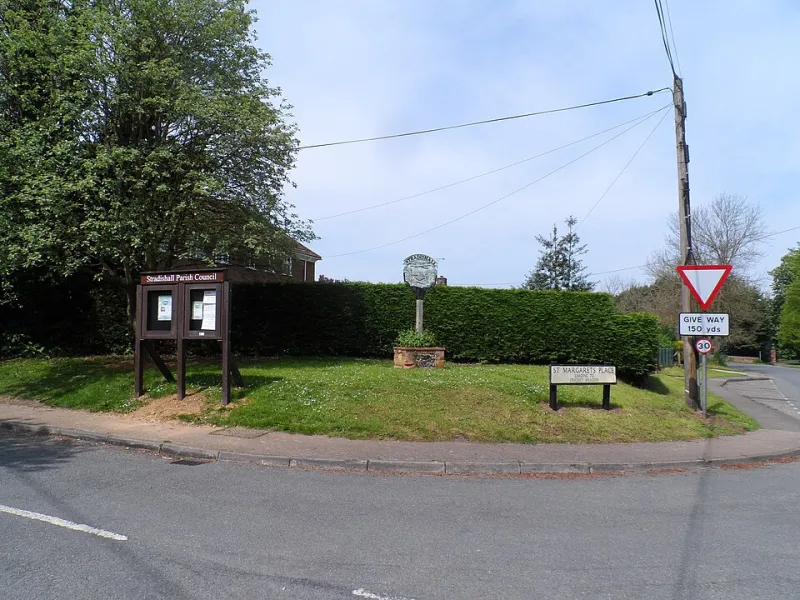
The parish council is the second channel. Its website, noticeboard and meeting agendas are where local issues get aired. You can email the clerk with a clear photo and location, or ask for the issue to be added to a parish council meeting. That is especially useful for problems that affect several people — a footpath that is impassable, a drain that floods the same corner every winter, or a cluster of streetlights out along one lane.
A short, factual post on a village Facebook group can also help you find out whether others have reported the same thing. Just don’t let the thread become the report. Councils do not monitor every local group, and a hundred comments are not a work order.
What ‘fixed’ realistically looks like
This is where expectations matter. A safety defect may be inspected quickly and made safe with a temporary repair, with a permanent fix scheduled later. Routine patching can sit on a programme for weeks or months. Streetlight repairs may depend on parts or a contractor. Fly-tipping on public land usually needs an investigation before clearance. Footpath cutting follows seasonal schedules, not the moment the nettles reach your knees.
So when you report, ask what the next step is rather than demanding a date. “Will this be inspected?” is a better question than “When will this be done?” If you get a reference, note the date and check back politely after a reasonable interval. If nothing has changed, reply to the same reference rather than starting again with a fresh form.
Following up together without falling out
Village problems are rarely solved by one heroic email. They are solved by a handful of residents giving the same clear information to the same place. If three people report the same flooding drain, that is evidence. If three people report three slightly different drains, it is noise.
A sensible approach is to nominate one person to gather photos, locations and reference numbers, then share them with the parish council. Ask for the issue to go on the agenda. Keep the tone factual: what is wrong, where it is, who has reported it, what response has been received. Avoid naming neighbours or turning a hedge dispute into a village referendum.
And if the answer comes back that it is a private matter — a hedge, a driveway, a fence — accept that the council may not be the answer. Sometimes the most useful next step is a polite note through a door, or a chat at the shop, rather than another round of emails.
Iron Acton is small enough that these things can feel personal. A pothole is not just a pothole; it is the lane you walk every morning. But the system works best when reports are specific, references are kept and neighbours compare notes calmly. Fix the problem, not each other.