Two Minutes and a Bend: A Newcomer’s Guide to Iron Acton Directions
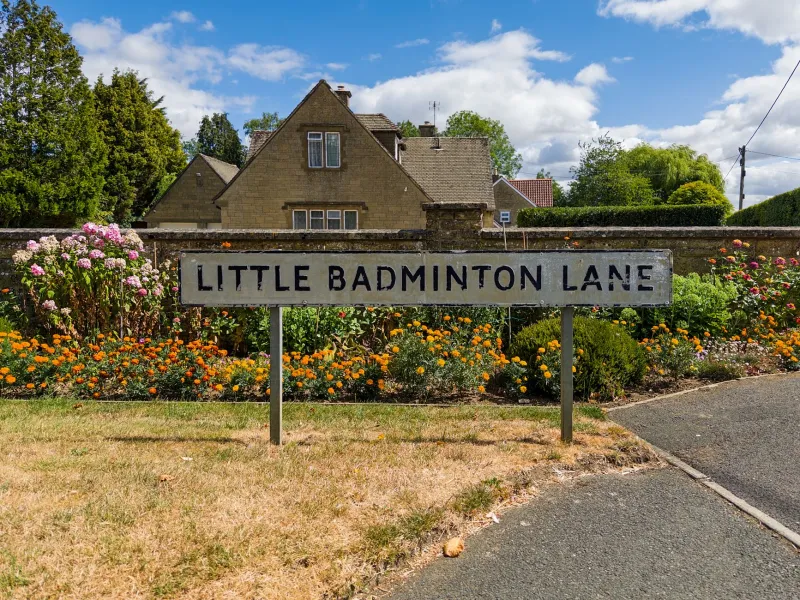
There are two ways to give directions in Iron Acton. The first involves a postcode and a sat-nav. The second involves a bend, a hedge and a vague wave of the hand. The second is more common.
This is not a criticism. It is simply how village distance works. Ask for the village hall and you may be told it is ‘just past the church, opposite the bit where the pavement widens’. Ask how far that is and you will get a thoughtful pause, followed by ‘two minutes’. Neither answer is wrong. They are just speaking a different language.
The Basic Units: Minutes, Bends and Landmarks
Iron Acton’s unofficial system has three core units. The first is time, but not clock time. A village minute is not sixty seconds. It is roughly the time it takes to walk from one familiar point to another while saying hello to two people and stopping for one dog.
The second unit is the bend. ‘Past the bend’ is a complete instruction, even when there are several bends in the parish. Context does the rest. The bend near the school is not the bend near the church, and everyone knows which one they mean.
The third unit is the landmark. Not a grid reference, not a what3words square, but a thing you can see: the church, the school, the village hall, the big tree, the white gate, the house with the wonky fence. Landmarks are how the village turns a route into a story.
What ‘Two Minutes’ Actually Means
If someone in Iron Acton says ‘two minutes’, they usually mean somewhere between two and six minutes on foot. The lower end applies if you are walking briskly and know where you are going. The upper end applies if you meet someone you know, which is likely.
A five-minute walk is often closer to ten. A ten-minute walk is a proper outing, possibly involving a pavement that stops without warning. ‘Just down the road’ is the most flexible phrase of all. It can mean a two-minute stroll to the postbox or a fifteen-minute yomp to the edge of the village. It depends entirely on who is saying it and whether they are on foot or in a car.
This is why comparing village directions to a phone map can feel like checking a recipe against a chemistry set. The phone is precise. The villager is contextual. Both get you there, but only one will tell you to mind the puddle by the gate.
A Short Glossary for Newcomers
‘Just down the road’ — Anything from 200 yards to a mile. If said by a driver, it may mean ‘too far to walk, but I do it anyway’.
‘Two minutes’ — A short walk, plus greetings. Allow five.
‘Past the bend’ — Keep going until the lane curves. You will probably see the thing you need before the second bend.
‘Opposite the church’ — St James is the anchor. If you reach the church, you are close. If you are at the church and still asking, you may be facing the wrong way.
‘By the school’ — The primary school. At drop-off and pick-up times, this means ‘by the school and half the village’, so add time for manoeuvring.
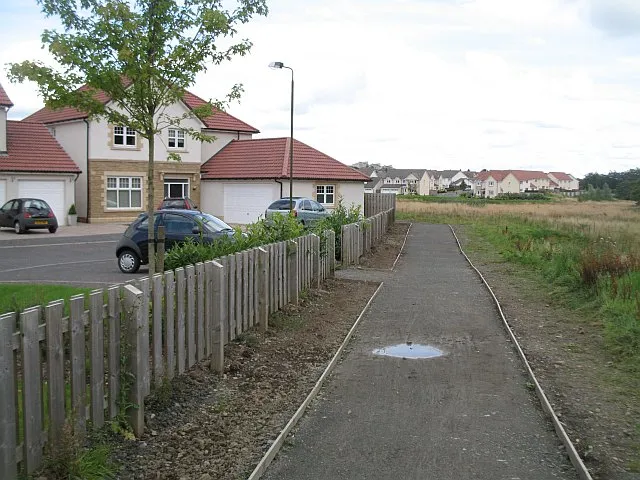
‘Where the pavement runs out’ — The edge of the village. Wear sensible shoes. The verge is not a pavement, whatever the map suggests.
‘You’ll know it when you see it’ — Usually true. Occasionally optimistic. Ask what you will see, just in case.
‘As the crow flies’ — Ignore this. Crows do not use lanes, stiles or gates. You are not a crow.
‘A nice walk’ — Could be twenty minutes. Could be an hour. Could involve a hill you did not agree to.
Testing the System Without Being Annoying
You can check village distances with a step counter, but a stopwatch is almost rude. The better method is to walk the route once and notice where the landmarks fall. From the village hall to the church is a short hop, but it takes longer than you think if you pause to read the noticeboard. From the school towards Acton Court is a gentle stretch, and the gate is a natural place to stop and look back.
The point is not to prove anyone wrong. It is to learn the local rhythm. A route that looks like a straight line on a screen may include a bend, a narrow bit and a place where you wait for a car to pass. Village directions fold all of that into one phrase: ‘you’ll be fine, just keep going’.
Why the System Survives
In 2026, almost everyone has a map in their pocket. Yet the village system survives because it does something a blue dot cannot. It tells you what to expect. It warns you about the bend. It reminds you to say hello. It turns a journey into a small social event.
For newcomers, the trick is not to fight it. Ask for a landmark as well as a distance. Repeat the instructions back. If someone says ‘you’ll know it when you see it’, ask what you will see. And if you arrive two minutes later than you expected, do not complain. You were probably stopped by a conversation, which is its own kind of village welcome.
Iron Acton’s distances are not vague because nobody knows. They are vague because everybody knows. That is a different thing entirely, and it is worth learning the language.